An Overlooked Way to Improve Your Guitar Playing

Most guitarists learn to play some basic open string chords and a handful of barre chords.

After this, the focus is usually pretty much just on songs.  In other words, most guitar players don’t learn any new chords unless they encounter them in a new song.

But have you ever thought about this?

In most popular songs, about 80% of the guitar parts involve playing guitar chords. This means that the vast majority of your guitar playing is related to chords. This is especially true if you’re in a band, or want to be in one soon.

So doesn’t it make sense to devote some of your guitar practice time to learning new guitar chords?

The more guitar chords you learn, the faster you will learn songs.

If you want to improve your guitar playing and learn songs faster, spend some time working on new guitar chords.

Decide that you are going to learn 3 new chords every week. That means you will learn 12 new guitar chords every month. As you can guess, this will add up fast. In a year you have added 144 new guitar chords to your vocabulary.

Now here is an important point to keep in mind…

You do not have to learn every guitar chord under the sun!

However, the more chords you know, the faster you will learn songs.  Also, if you want to write your own songs, having a good chord vocabulary will help you immensely.

As your chord vocabulary improves, you can use all kinds of substitute chords in your own songs to add variety, freshness, and your own personal touch.

A good chord vocabulary will help you develop your own personal guitar style and sound.  Also, if you are doing cover songs and want to change things up a bit you can use substitute chords.

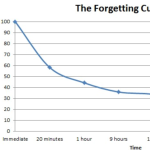
The key when you learn new guitar chords is that you MUST find a way to use them.  If you learn a new chord and don’t use it, it’s like learning a new word and never being able to use it in conversation. In a short period of time you will forget the word.

The same is true with guitar chords: if you don’t use them you will forget how to play them.  So use it or lose it.

To learn new guitar chords, and understand how they work, get started with Guitar Essentials: Chord Master Expanded Edition, or 7 Secrets to Learn any Guitar Chord Super-Fast.

Announcing The Top 30 Most Powerful Guitar Technique Exercises of All Time

If you’re reading this, I’m sure that you are not 100% satisfied with your guitar playing…

Ultimately, you want to play more accurately, with better technique, and yes, a bit more speed would be great too.

The Holy Grail

The problem is that very few guitarists know the most effective ways to improve their technique.  Everyone is looking for the “holy grail” of technique—a way to magically transform their playing overnight into a virtuoso.

But let’s face it: very, very, few guitar players actually know the secrets of how to practice for maximum results.  The players that know these secrets want them to remain TOP SECRET!

It’s Shocking But True…

I’ve taught guitarists of all levels and I’m always blown away by the fact that 98% have no idea of what is actually required to improve their technique and lead guitar playing. They don’t know how or what to practice for maximum results.  This is through no fault of their own.  They simply were never shown these secrets and didn’t luck out and discover them on their own.

Until now…

Top 30 Most Powerful Guitar Technique Exercises of All Time

Discover the Top 30 Most Powerful Guitar Technique Exercises of All Time

Lead Guitar Technique: How to Break Free from Pentatonic Scales to Create Your Own Cool Guitar Solos Part 2

Now we will look at the major pentatonic scale and the major scale.

Here are the notes that are found in the C major pentatonic scale:

C         D            E            G            A

Now we will look at  a common fingering for the C major pentatonic scale. If you are not quite sure how to read guitar scale fingerings, read this post: Guitar Scale Lesson: How to Read Guitar Scale Diagrams.

C major pentatonic scale fingering

Now let’s look at the C major scale.

The C major scale contains the following notes:

C         D             E             F             G             A             B

Here is a fingering for the C major scale.

C major scale fingering

What do you notice when you compare these two scale?

C major vs C major pentatonic scale fingerings

Do you see how they share some notes?  The only difference between these scales is the C major scale contains the notes F and B, whereas the C major pentatonic scale does not.

So in other words, if you drop out the notes F and B from the C major scale you will have a C major pentatonic scale.

C major vs C major pentatonic scale notes

The best way to start using the major scale in your guitar solos is to first think of it as simply giving you some extra notes to add into your guitar solos.

Your first step is to make sure you are familiar with both of the scale fingerings shown above.  Then you can start to mix things up a bit.

Exercise #1

Play the major pentatonic scale ascending and then play the major scale descending.  Do this several times until you feel comfortable doing this.

Exercise #2

Next play the major scale ascending and play the major pentatonic scale descending. Practice this until you can easily play it.

Exercise #3

Finally, play the major scale ascending and descending, and then play the major pentatonic scale ascending and descending.

Once you’ve completed the above exercises you are ready to start to experiment with these scales in your guitar solos.

There are two main approaches I would recommend you start with.

The first way to begin creating guitar solos is to make the major pentatonic scale your main scale.  All you do is add in the extra two notes here and there for interest and variety.

Once you fThe World of Scales: A Compendium of Scales for the Modern Guitar Playereel comfortable with the above you can switch it up.  Now start soloing with the major scale as your main scale and simply drop out the notes B and F occasionally.  This means you will now be primarily using the major scale for your guitar solos!

As you can guess, there’s lots more to soloing than this, but this will get you well on your way to creating great-sounding guitar solos.

To learn more fingerings for the major scale and see how they connect over the entire fretboard check out my guitar scale course called The World of Scales: A Compendium of Scales for the Modern Guitar Player.